


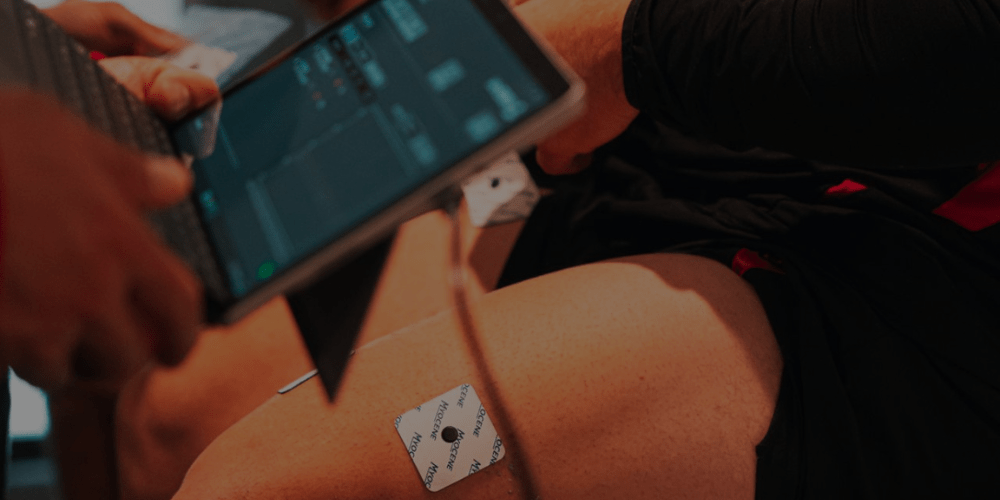
In the highly demanding environment of France’s TOP 14, performance margins are slim and player availability is everything. For LOU Rugby, integrating objective, actionable data into daily performance and medical workflows is not optional, it is essential. To support this ambition, LOU Rugby has integrated Myocene into its performance and medical protocols, using the technology to better manage fatigue, mitigate injury risk, and individualize training loads across the squad.
Addressing a Critical Performance Challenge: Fatigue and Injury Risk
For elite rugby teams, performance is inseparable from player availability. Managing muscle fatigue while maintaining competitive intensity requires accurate data that does not add burden to athletes. As Pierre Sagot, Head of Performance at LOU Rugby, explains, “I think this is a tool that will become indispensable. It really gives us additional data to combat injury and fatigue, and to optimize player performance. Myocene addresses some pretty crucial factors.” LOU Rugby was specifically looking for a solution that could complement existing monitoring systems without increasing player workload or complexity.
Seamless Integration Into Daily Routines
One of the defining reasons LOU Rugby adopted Myocene was its passive nature for athletes. “We were really looking for a piece of the puzzle where the player doesn’t have to do anything,” says Sagot. “We can now generate fatigue indicators calculated by the Myocene tool, which allows us to individually adapt each player’s week, particularly in terms of strength training. This allows us to fine-tune the work both individually and collectively.” With a protocol lasting 90 seconds, Myocene fits seamlessly into the players’ daily routine, eliminating compliance issues often associated with monitoring tools. Today, Myocene is fully embedded into the squad’s daily schedule,“They arrive at the stadium, take care of their well-being, have breakfast in our designated area, and then they use Myocene. They know it takes less than two minutes and it kick-starts their day.”
Clear, Objective Data for Medical Decision Making
From a medical perspective, the value of Myocene lies in its simplicity and clarity according to Romain Loursac, Team Doctor at LOU Rugby, “Its simplicity, speed, and ability to quickly extract objective values and facilitate clear communication with the players are key. This allows us to get a fairly precise player assessment in a very short time and adds another string to our bow.” This rapid assessment capability supports informed conversations between medical staff, performance staff, and players without overcomplicating decision making.
Ultimately, Myocene’s impact is measured where it matters most, player availability. “Performance means having as few players as possible in the medical room,” says Loursac. “That’s primarily where Myocene helps us. The fewest players on our team are using Myocene for medical reasons, which is good for team results and therefore performance.” By identifying fatigue trends earlier and adjusting workloads proactively, LOU Rugby reduces unnecessary strain and minimizes preventable injuries.
Flexible Use Across the Competitive Calendar
Myocene’s portability has also proven valuable across congested schedules and travel periods. “We use it on day two post-match and on day one before match number two,” explains Sagot. “We can use it when they’re traveling, it’s easy to transport, even by plane, and very effective.” This flexibility ensures continuity of monitoring regardless of match location or travel demands.
For LOU Rugby, Myocene has evolved from a new technology into a core performance asset supporting individualized training, informed medical decisions, and improved player availability throughout the season. Elite clubs looking to mitigate injury risk, individualize training loads, and integrate objective fatigue monitoring without adding player burden can experience Myocene firsthand.
Book a demo for your club performance and medical staff today